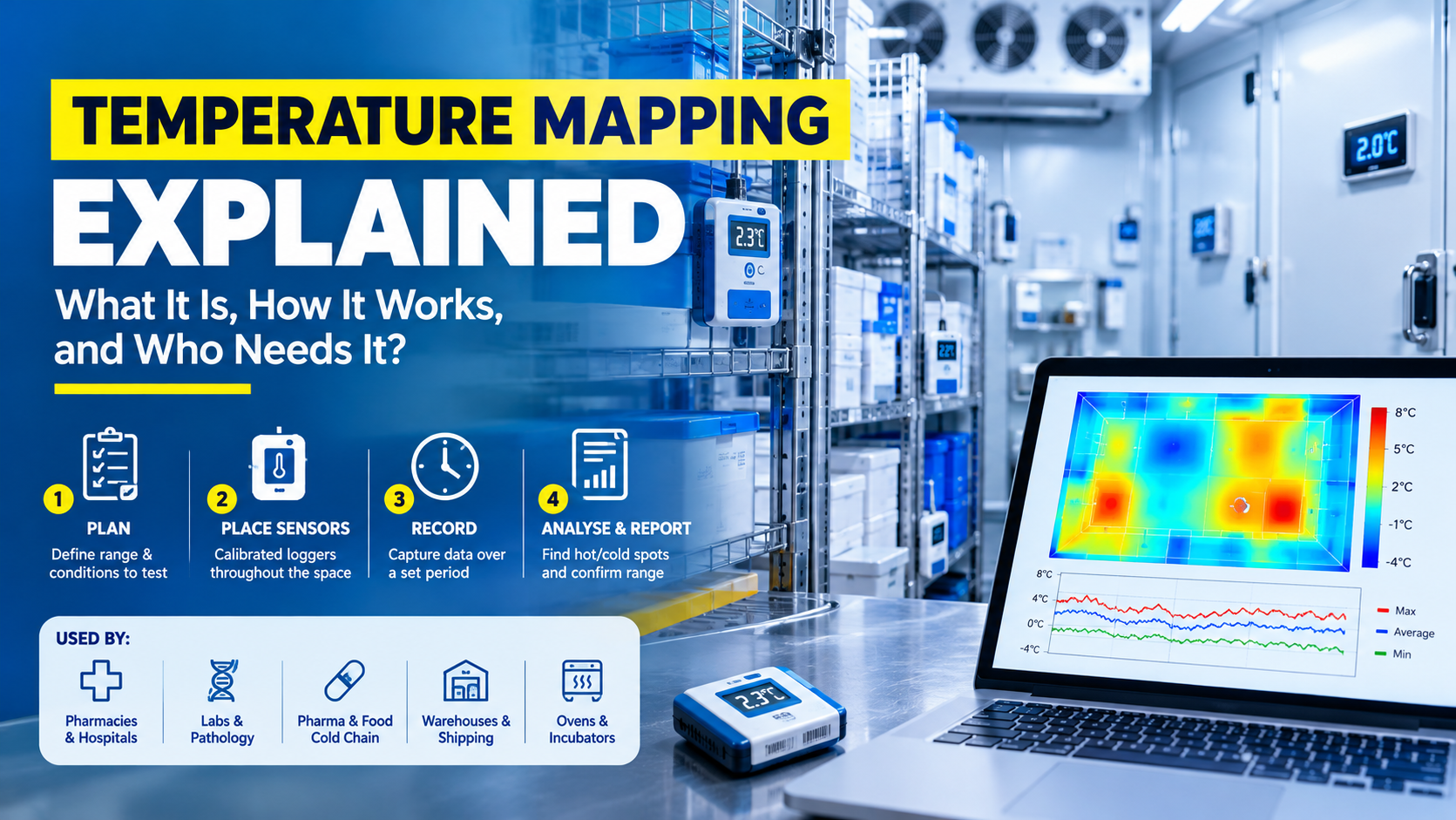
A single thermometer only tells you the temperature at one spot. Inside a cold room or fridge, temperatures can differ from corner to corner, shelf to shelf and near the door. Temperature mapping shows you that variation.
How a temperature mapping study works
- Plan. Define the temperature range the space must hold and the conditions to test, such as normal operation, door openings and typical loading.
- Place sensors. Calibrated data loggers are positioned throughout the space, including corners, the centre, high and low levels, and near doors, evaporators and vents.
- Record. The loggers run for a set period, long enough to capture normal cycling and the conditions you want to test. The right duration depends on the space and your requirements.
- Analyse and report. The data is analysed to find hot and cold spots and to see whether the whole space stays within range.
What you get
A mapping report typically shows the temperature profile across the space, identifies the hottest and coldest locations, states whether the range was maintained, and recommends where the permanent monitoring sensor should go so it reflects the worst-case location.
Who needs temperature mapping?
- Pharmacies, clinics and hospitals storing vaccines and medicines, including 2 to 8 °C fridges;
- pathology, blood and sample storage;
- pharmaceutical, food and other cold chain operators with cold rooms, freezers and refrigerated vehicles;
- warehouses and shipping containers holding temperature-sensitive goods;
- laboratories with ovens, incubators and stability chambers.
Whether mapping is required depends on your industry, your customers and your quality system. Guidance such as the Australian Government’s National Vaccine Storage Guidelines (“Strive for 5”) sets expectations for vaccine storage, and many quality systems expect evidence that storage conditions are controlled.
When should mapping be repeated?
- after a fridge, freezer or room is installed, moved or repaired;
- after changes to layout, shelving, loading patterns or the refrigeration system;
- at the intervals set by your procedures or customers;
- when monitoring shows unexplained temperature excursions.